
Reassociating with "Dissociation"
A Case for the Thing We Keep Pushing Away

“Dissociation” often gets a bad rap. I think instead of distancing ourselves from dissociation, it’d be wise to find its proper place in the whole.
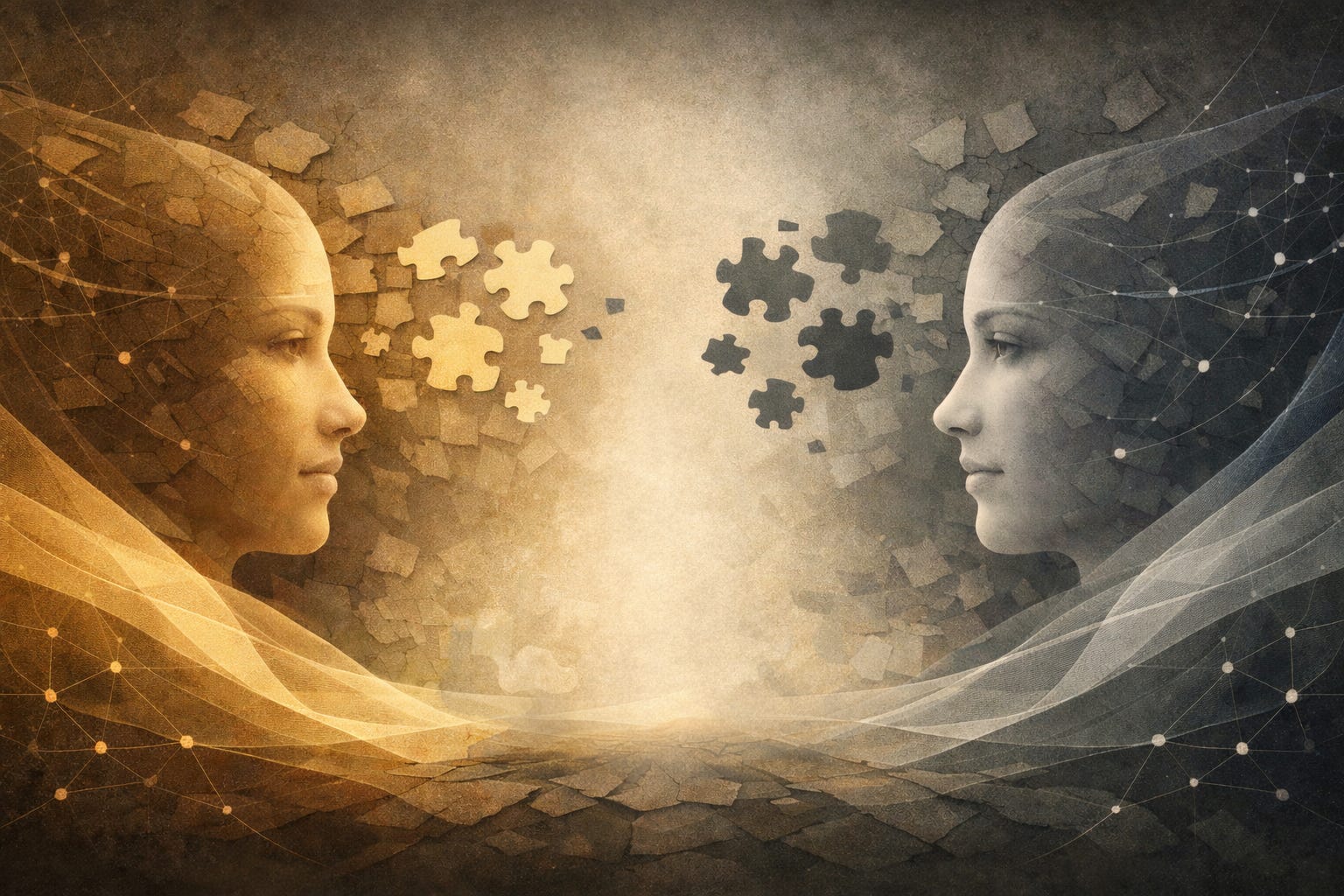
First, let’s understand what the word “dissociate” means, literally, without looking it up in the DSM. Let’s go back to first principles. To dissociate means to stop associating with something—to stop being connected to it or relating to it. It is like when you are in a fight with a friend, and it crosses a red line, and you decide you do not want to be associated with this person anymore.
From the point of view being whole, this is a problem. When we dissociate from some part of ourselves, or each other, or the world, we are in an oppositional relationship, where we feel separate, disconnected, and fragmented from the whole. However, from the point of view of becoming whole, I’d submit that dissociation is a natural, and even expected, part of the process of growth & development.
Transcend and Include
This is a phrase I learned from one of my first mentors, Ken Wilber, in his approach to Integral Theory. He described development as a process of both transcending and including. For Wilber, this means first that we have to let go of something that we were previously identified with; and then, and only then, can we begin to include what remains.
Disidentification is transcendence. You realize you are not just that. In my experience, when I let go of an aspect of self, an identity, or a relationship that is no longer serving, I experience a freedom beyond that association. I realize that I am bigger than that.
The initial reaction to that vast bigness is both an experience of freedom, and a desire for that freedom to continue. We think we will lose our freedom if we associate with that old thing again, so we distance ourselves. We seek out the opposite, because we finally have a frame of reference outside of that claustrophobic relationship, and we don’t want to lose it.
In a perfect world, this process of transcendence would not include any dissociation. We wouldn’t split ourselves up in the journey toward wholeness. But I do not live in a perfect world; I live in one that is both perfect as it is, and as Suzuki Roshi pointed out, “could use a little improvement.”
The Process of Integration
Part of the natural process of development is to spend time in the transcendence phase before you are able to go back and include what remains. There is a period of agitated, rebellious growth, in which we don’t merely transcend the thing we were once identified with, we reject it entirely. Once we move through this phase, we realize that the part, or person, or situation we tried to get rid of is still present in some way. If we really want to be whole, we have to make space for it and embrace it as part of the whole—not embrace it as who we ultimately are, but as part of who we are.
This doesn’t just happen once; it happens again and again across a lifetime (multiple if you’re Buddhist). While some may experience instantaneous transcendence and inclusion—where something is let go and then instantly embraced as part of a larger whole—most of us go through a process of gradual rejection and then coming back around to integration. We realize we threw the baby out with the bathwater, even as we can also acknowledge that the baby needed to get out of the bath.
Pathologizing Dissociation
I want to apply this same logic now to people who feel dissociation is always bad and should be avoided. Essentially, they are saying we should dissociate from dissociation. This results from the adoption of the pathologizing lens of Western psychology. Western psychology exists to point out what’s wrong, to point out what’s dysfunctional. We struggle with integration and inclusion, in part, because of this conditioning. But dissociating from dissociation is not integration; it is an insistence that only one side of reality is true, that only one side is “healthy.” It is like a religious zealot who thinks reality can be effectively split into Good and Evil, while their view of God doesn’t yet include both. They imagine a small God who only loves one half of reality.
What if dissociation and depersonalization are better understood, not “Evil,” but as part of the generative dance that drives evolution? Can you consider the possibility that dissociating from dissociation, is itself part of the process of becoming more whole? If you could hold such a view, how would you include dissociation back into your experience in a way that honors its reality?
Practice with us: We learn more, when we learn together. If you want to learn together with experienced teachers & driven peers, we’re welcoming new members to the Pragmatic Dharma Sangha.
Work with me: I have over 15 years of experience being a catalyst for other’s natural process of awakening & integration. Schedule a short call with me, if you’d like to learn more & connect.